
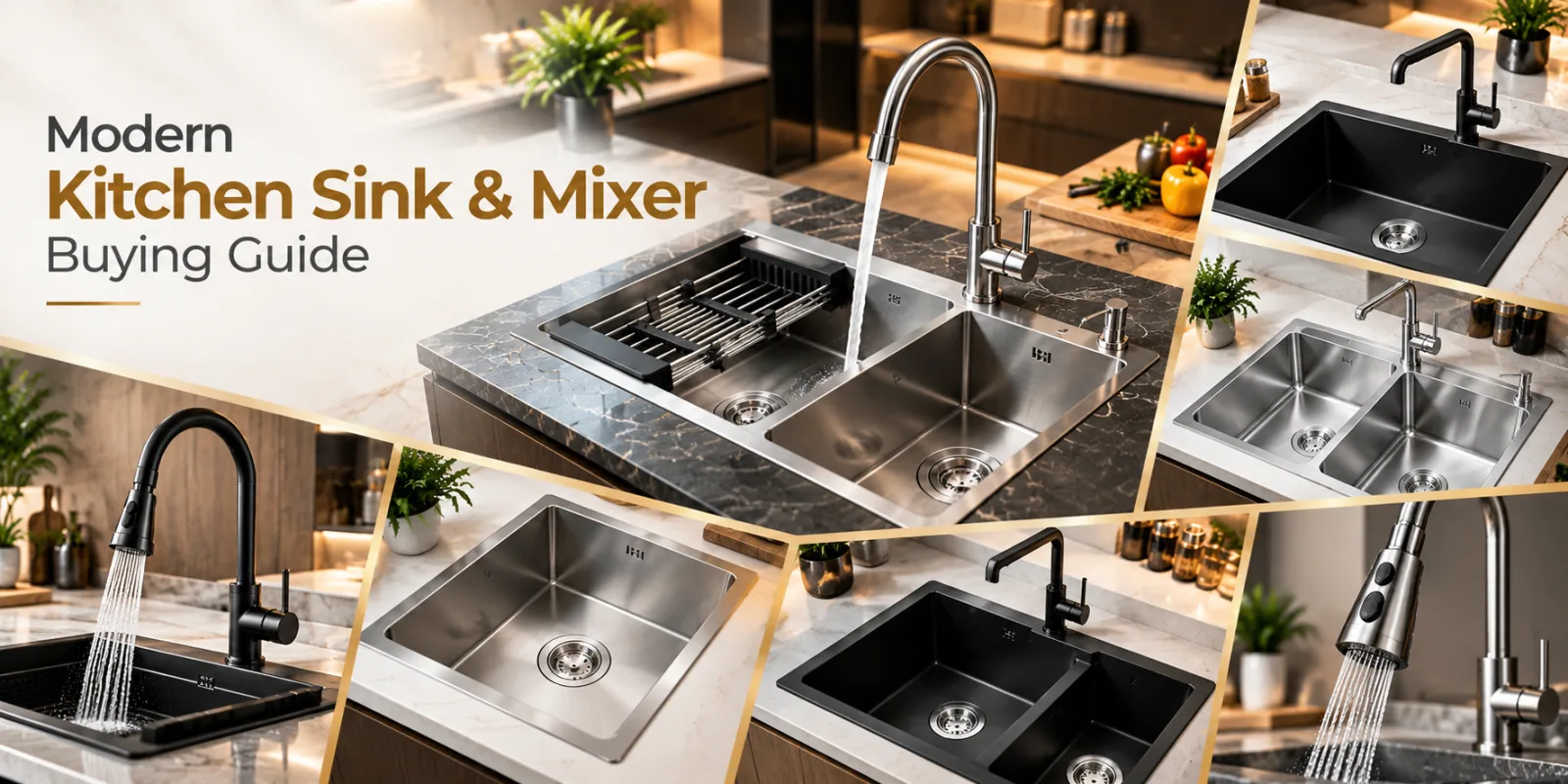
Modern Kitchen Sink and Mixer Buying Guide
A kitchen sink and mixer are used more often than almost any other fitting in the home. They handle utensils, vegetables, drinking water, cleaning and everyday cooking prep, often several times a day. When the sink is too small, the spout is too short or the mixer is awkward to operate, the whole cooking area feels harder to manage. This kitchen sink and mixer buying guide explains how to choose a combination that fits the kitchen, the plumbing and the way your family cooks.
The goal is not to buy the largest sink or the most complicated mixer. It is to create a washing area that is comfortable, easy to clean and practical for daily Indian cooking.
Start with the sink size and kitchen workflow
Measure the available counter space, the distance from the sink to the hob and the space needed for preparation. A sink that is too large can leave no room for chopping, while a sink that is too small makes it difficult to wash large pots and trays. Think about the tallest vessel you regularly wash and check that it fits comfortably inside the bowl.
For many Indian kitchens, a single bowl kitchen sink for Indian kitchens is practical because it provides one generous washing area. A double bowl sink can be useful when one side is used for washing and the other for rinsing, but it also needs more counter width. If the kitchen is compact, measure carefully before choosing a double sink; two small bowls can be less useful than one well sized bowl.
- Confirm the cabinet width and the space needed for the sink cut-out.
- Check the depth of the bowl against your largest cooking pot.
- Leave enough landing space beside the sink for utensils and chopping.
- Plan the drain position before the counter is cut.
Choose a sink material that suits daily use
Stainless steel remains a popular choice because it is practical, easy to wipe and widely available in different grades and finishes. A brushed finish tends to hide minor scratches better than a highly polished surface. If you choose stainless steel, ask about the grade and thickness so the sink does not feel flimsy when a heavy vessel is placed inside.
Other materials, such as quartz or composite sinks, can suit specific interior styles, but they need different cleaning care. Whatever the material, check the edges, the slope towards the drain and the finish around the waste opening. A sink that holds water around the edges will need more wiping after every use.
A well chosen sink should also match the mixer. The number of mounting holes, the deck thickness and the position of the drain all affect the fittings that can be installed. Keep these details ready when you compare models.
Pick a mixer that matches the sink
A table mounted sink mixer is a common choice because it sits on the sink deck or counter and is easy to reach. Check the base diameter and the space available on the deck. If the sink has a narrow rim, a mixer with a compact base may be more suitable. A single lever sink mixer with swivel spout lets the user control flow and temperature with one hand and move the spout towards the bowl being used.
A pull out kitchen mixer for flexible washing adds reach without adding a second tap. The spray head can be pulled towards the corners of the sink, which helps with rinsing plates, cleaning the bowl and filling tall vessels. Check that the hose retracts smoothly and that the head sits securely when it is not in use.
Wall mounted mixers can save deck space, but they require the plumbing to be planned inside the wall. They may suit a new kitchen or a renovation where the wall is being opened anyway. For a simple replacement, a table mounted mixer is usually easier to install because the connections remain accessible below the counter.
Check spout height, reach and clearance
The spout should reach the centre of the bowl without forcing the user to hold a vessel at an angle. If the spout is too short, water may fall near the edge and splash onto the counter. If it is too tall, the stream can be affected by air and may splash more. Test the spout position with a large pot in mind, not just a glass.
Leave enough clearance for the lever to move up and down and for the spout to swing from one bowl to the other. Check the space between the mixer and the wall, window sill or cabinet. A kitchen mixer with comfortable spout clearance should let you fill a tall stockpot without removing the vessel from the sink.
If the kitchen has a window directly above the sink, confirm that the mixer height does not block the window or the frame. In compact kitchens, a pull out spray head can be more useful than a very tall fixed spout because it provides reach without taking up extra vertical space.
Plan hot and cold plumbing and installation
A mixer needs both hot and cold supply lines, even if the kitchen currently uses only cold water. If a geyser is planned later, leave the hot line provision now so the wall and counter do not have to be opened again. Confirm the inlet size, the position of the stop valves and the space below the sink for the connections.
Ask the plumber to check the water pressure before installation. A mixer that works well at low pressure may behave differently when the pressure is increased, and a pull out hose can become difficult to control if the pressure is very high. A pressure-reducing valve may be needed in some homes, depending on the supply arrangement.
Before fixing the sink, check the seal around the waste, the slope towards the drain and the clearance below for the trap. A small leak around the waste or the mixer base can damage the cabinet over time, so test the connections with running water before the area is closed up.
Keep the sink and mixer easy to maintain
Daily care should take only a minute. Wipe the sink after washing utensils, dry the mixer with a soft cloth and remove food residue before it hardens. Clean the aerator when the flow becomes uneven and check the joints for drips. Avoid abrasive powders that can scratch the sink or dull the tap finish.
For stainless steel sinks, use a mild cleaner and a soft sponge. Do not leave acidic food waste or strong cleaning chemicals sitting on the surface. For a pull out mixer, keep the hose away from sharp edges and hot pans, and check that it retracts fully after use. If the head begins to stick, inspect the hose and counterweight instead of pulling harder.
A sink that is easy to clean has a gentle slope towards the drain and rounded corners. A mixer that is easy to maintain has a smooth lever, a stable base and a surface that does not trap grease. These small details matter more over the years than a long list of features that are rarely used.
Use a simple buying checklist
- Measure the cabinet, counter and sink cut-out before choosing a model.
- Check the bowl depth against your largest cooking vessel.
- Confirm the number and position of mounting holes.
- Choose a mixer with comfortable spout reach and lever clearance.
- Plan hot and cold lines, stop valves and drain access.
- Ask about the finish, cleaning method and availability of spare parts.
For buyers comparing a modern kitchen sink and mixer combination, it helps to see the products together. Place the mixer beside the sink or check the dimensions at the counter so the proportions are clear. A supplier who understands both the sink and the fittings can point out installation issues before the order is placed.
Frequently asked questions
Which is better: a single bowl or double bowl sink?
It depends on the space and cooking style. A single large bowl is practical for big pots and trays. A double bowl can separate washing and rinsing but needs more counter width. Measure the cabinet before deciding.
Can I install a pull out mixer on an existing sink?
Usually yes, if the deck has enough space for the base and the plumbing can accommodate the hose. Check the mounting hole, the space below the sink and the hose movement before buying.
How do I stop the mixer from splashing?
Check the spout position, water pressure and the height of the outlet. A stream aimed at the centre of the bowl and a suitable aerator reduce splashing. Very high pressure may need adjustment.
Where can I buy kitchen sinks and mixers for my home?
Jain Traders stocks kitchen sinks, sink mixers, pull out mixers and kitchen fittings. Share your counter size, sink layout and cooking routine with the team so they can suggest practical options.
A good kitchen washing area is a combination of the right sink, a mixer that reaches comfortably and plumbing that is planned before installation. Take measurements, think about the largest vessel you wash and choose a finish you can maintain. To compare options, explore the Kitchen Fittings range at Jain Traders or speak to our team for help with a kitchen sink and mixer buying decision for your home or project.
Looking for the Right Sanitary Products?
Contact our team for product enquiries and assistance with your requirements.